Bitcoin Mixing Services Under Increased Scrutiny
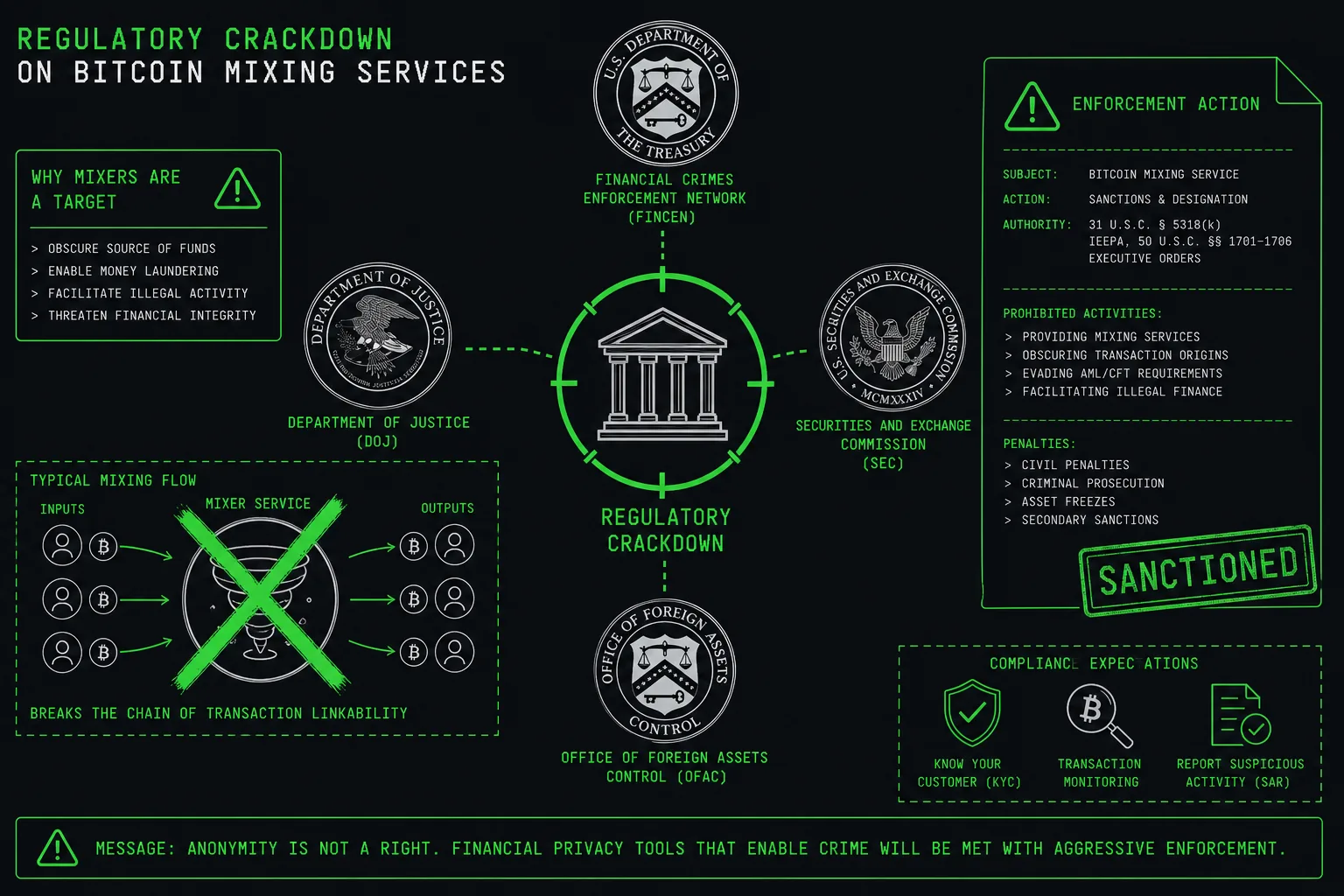
In February 2026, coordinated guidance from financial regulators in the US, EU, and UK expanded oversight of cryptocurrency tumbling and CoinJoin services. Building on the Tornado Cash sanction, the guidance indicated services facilitating obscured cryptocurrency transactions may require money services business licensing regardless of whether the technology is decentralised or peer-to-peer in nature.
What New Regulatory Guidance Targets Bitcoin Mixing?
The regulatory expansion followed late-2025 actions resulting in shutdown of two centralised Bitcoin mixing services. The 2026 guidance extended scrutiny to decentralised CoinJoin coordinators. Some exchanges now refuse coins with CoinJoin history. Community response has accelerated discussion of BTC-to-XMR conversion as a superior privacy solution. Non-custodial swap services like Trocador and Bisq XMR pairs are not currently classified as money services under existing guidance.
How Does This Affect Bitcoin Privacy on Darknet Platforms?
Monero's default-private model is unaffected by mixing service regulatory actions, as XMR privacy is implemented at the protocol layer rather than through a separate coordination service. No major Western jurisdiction has yet classified Monero itself as illegal, though several exchanges have delisted XMR under regulatory pressure. The Nexus Website cryptocurrency guides are updated regularly to reflect the current landscape.
What Are the Viable Alternatives to Bitcoin Mixing?
Related: Market Overview · OPSEC Guide · Crypto Guide · News Archive · Official Access Links